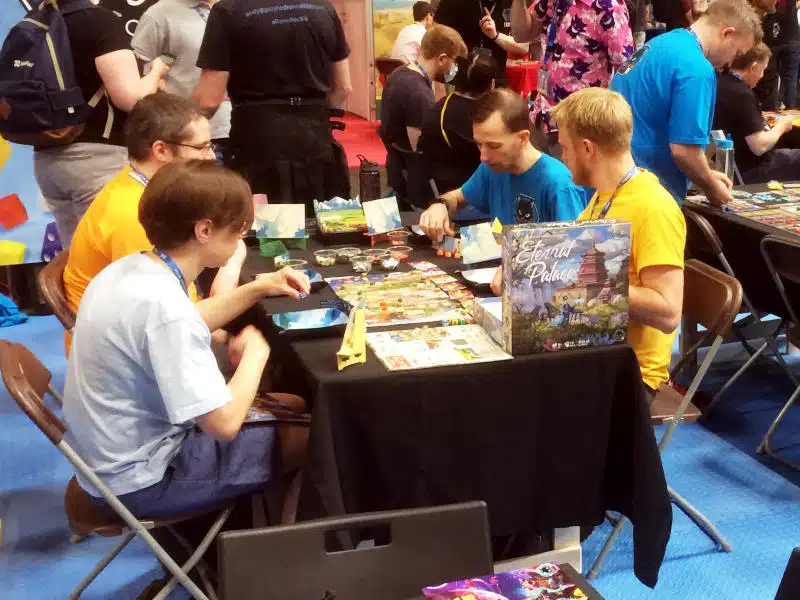
Balance in board games is one of those much-talked-about topics that keeps cropping up. Some people want games to be perfectly balanced, so that players’ only advantage comes from their skill and hours of practice and graft. Others relish highly unbalanced games, where it’s nigh-impossible to win, but when you do win, it feels amazing. Yet, balance in board games is much more complex and subtle than that. In this article, I want to look at the role that balance plays in board game design.
Listen to the Audio Version
Intro Music: Bomber (Sting) by Riot (https://www.
Music: Relaxing Lofi – Ena, produced by Sascha Ende
Link: https://ende.
Music: Relaxing Lofi – Dyo, produced by Sascha Ende
Link: https://ende.
Balance as a Spectrum
Of course, balance isn’t just black or white. Board games are never just balanced or unbalanced. Balance is a spectrum shaped by the designer’s intention, the players’ skill, and the story the board game is trying to tell.
On one end, perfectly balanced games like Chess or Go place every player on an identical footing. These and other games are balanced, because they are symmetric. Everyone has the same starting position and the same abilities. Who wins is entirely down to who plays the game better. These games reward skill, strategic foresight, and careful planning.
At the other end of the spectrum are board games that are highly unbalanced. The imbalance comes from asymmetry, where players have different starting positions, different powers or some other advantages or disadvantages. Imbalance usually leads to epic swings and often unpredictable outcomes, which is what creates tension and highly charged emotions. The board game Cosmic Encounter is famous for being hugely unbalanced. Players’ powers are ridiculously strong when used at the right time and almost feel like they will break the game.
Of course, there are many games that sit somewhere between perfect balance and complete chaos. Understanding balance as a spectrum allows us to appreciate why games that are imperfectly balanced can be as compelling as those that are mathematically fair. Different levels of balance lead to different experiences, all of which are valid, and all of which can lead to rich experiences if the imbalance is intentional and meaningful. By thinking of balance this way, the rigid question of whether a game is “balanced” or “unbalanced” is replaced by a discussion about how a game feels when played and how it challenges its players.
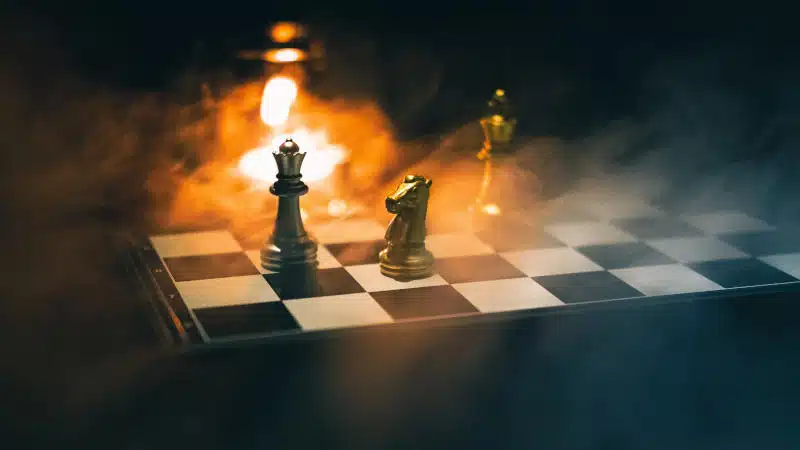
Perfect Balance in Competitive Games
Board games designed for competition are often perfectly balanced, because it is the easiest way to reward skill and strategy. In Chess, every player begins with an identical setup. Victory is based on who has the better tactical insight and is better at long-term planning. Perfectly balanced games allow players to pit their wits against each other without worrying that the game somehow favours one side. For those who enjoy testing themselves against someone else, perfect balance is hugely satisfying. Winning feels entirely earned and not down to some in-game advantage. Players can refine their strategies over time, learning from their mistakes and from each other.
Yet, perfect balance does not usually lend itself to excitement. Of course, Chess games can be tense, especially during the endgame phase, but that’s probably the only emotion that perfectly balanced games evoke. Perfectly balanced games usually feel a bit clinical and lacking in drama. Once someone has found the perfect winning strategy, their victories will feel inevitable, especially when players are mismatched in skill.
The absence of swings, surprises, or narrative tension can make perfectly balanced board games feel static, even when they are technically fair. That is why many abstract strategy games are more admired than loved. People can appreciate them for their elegance, but would rarely describe them as emotionally exciting. Perfectly balanced games challenge the mind but usually leave the heart cold.

Of course, those qualities are exactly what make perfectly balanced board games have such an enduring appeal, especially in the tournament space. They provide a pure arena for competition. Players can trust that the outcome is due to their skill and not luck or an arbitrary advantage. Perfectly balanced games are reliable, teachable, and satisfying, even if they lack the drama of unbalanced games.

Imbalance Creates Drama
Now, imbalance is the engine of drama, suspense, and many emotional highs and lows that make board games so memorable. In a game where one player is disadvantaged from the outset, each success is harder earned, and each setback becomes a moment of tension and storytelling. A player can seem doomed from the start, only to turn the tables in a single, dramatic turn. The shock of that reversal is what players will remember long after the game ends.
Imbalance is particularly effective in games that aim to recreate epic conflicts or historical struggles. The sense of unfairness mirrors life. In war, the two sides were rarely on an even footing. One side either had a tactical advantage or was more powerful. That leads to tension and makes a victory by the weaker side feel more sweet. In Votes for Women, the Suffragettes were on the right side of history, but started at a huge disadvantage. When you play the game and win against the Opposition, it feels very satisfying, not only because you achieved a hugely meaningful historic outcome, but also because you won over adversity.
The unpredictability introduced by imbalance does not mean the game is chaotic or broken. Games like Godzilla: Tokyo Clash still reward tactical thinking and resource management. But they also allow for dramatic swings that feel part of the story and fair within the context of the game.
Imbalance can be an important tool for board game designers to build a narrative, create tension, and give players memorable gameplay moments. The thrill of a narrow victory or surviving incredible odds is often emotional, immersive, and far richer than simply playing optimally in a perfectly balanced system.
Imbalance in Cooperative Games
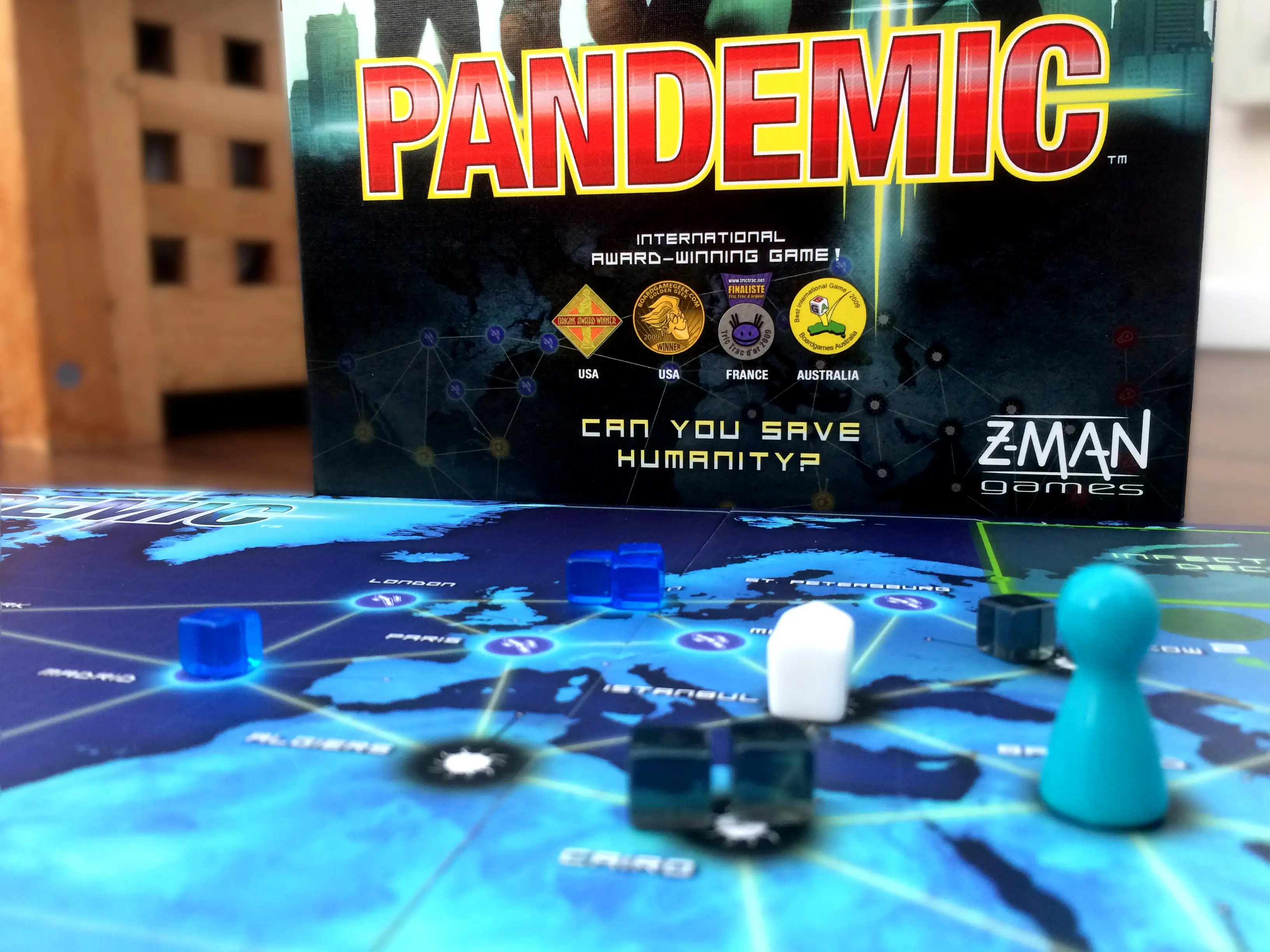
Cooperative board games are a great example of how deliberate imbalance affects the player experience. In co-op games, the challenge is often weighted in favour of the game itself. Games like Pandemic are designed to be difficult, so that players don’t win on their first try. They have to work together and use long-term planning, and sometimes sacrifice to achieve success. The imbalance between the players and the game is essential, because it increases tension, encourages communication, and makes victory feel hard-earned. If cooperative games were perfectly balanced and players and the game had an equal chance of winning, the emotional impact of overcoming the odds would be a lot lower. You basically have a 50:50 chance of beating the game, which feels like luck.
In co-ops, imbalance also encourages creativity and adaptation. Players must constantly assess their options, respond to unexpected developments, and negotiate trade-offs under pressure. It leads to decisions that feel important and meaningful, as players will feel the consequences of their choices in a tangible way. The imbalance becomes a narrative device. The game becomes a story of struggle, triumph, and occasionally failure. Players do not just execute their strategies. Instead, they experience a journey. The drama emerges from both the limitations imposed by the game and the agency that players have to respond.
It is this type of imbalance that demonstrates that the emotional highs and lows of a game are not solely derived from competition between players. Cooperative games show that imbalance can be used to generate engagement and excitement, even when the adversary is a game rather than another person. It shows that imbalance is a really versatile tool that shapes the emotions in a game in ways that perfect balance cannot. The players’ experience, not mechanical equality, becomes the measure of success.
Asymmetry That Balances Through Design
While asymmetric games often appear unbalanced at first glance, careful design can help to ensure that all players have a viable route to victory.
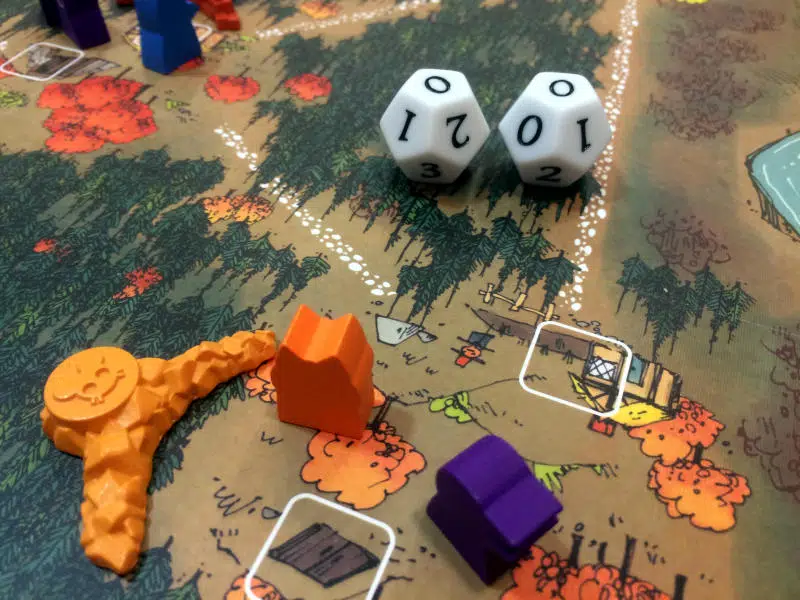
In Root, for example, factions each have unique strengths and weaknesses that create tension and variety. While some factions may initially seem overpowered, it will become clear how weak they actually are once players understand how to counter their perceived strengths. The appearance of imbalance is part of the design. It creates interest, strategic depth, and emergent narratives without giving any player an insurmountable advantage. The interplay of strengths, weaknesses, and player choices allows each game to feel fresh while still being fair in practice.
Cole Wehrle, the designer of Root, has described this approach by saying, “I don’t worry about balance too much until the end of a game’s development. The key is that […] you don’t remove all of the interesting design elements in the service of fairness. Instead, I like trying to find ways to balance a high powered position with increased strategic liabilities.” [1]
He also notes that in Oath, another game he designed, “The cards you craft in Oath are really powerful […] and so the emergent asymmetry is quite high.” [2]
Cole describes a philosophy that balance is not about eliminating differences, but about designing meaningful interactions where power comes with trade-offs. It is the tension between what a faction can do and what it must overcome that makes the gameplay compelling. The emergent asymmetry reinforces the point that games can be exciting and dynamic precisely because players occupy different positions and must adapt their strategies to the evolving board state. It shows that imbalance can create meaningful, memorable experiences while maintaining fairness in the context of the game.

Final Thoughts
Ultimately, the question of balance must be understood in the context of the designer’s intention. Board games are not only pieces of entertainment, but also tools for storytelling and emotional engagement.
In games like Doubt is our Product by Amabel Holland, for example, the imbalance is deliberate. It reflects the huge power of the tobacco companies and the difficulty faced by those trying to challenge them. The sense of futility and struggle is a feature, not a flaw. The imbalance in this game creates thematic resonance and narrative depth.
Imbalance is a tool for shaping the gameplay experience. Whether it is through asymmetry, swings, or deliberate difficulty, it allows designers to control pacing, drama, and engagement in ways that perfect balance cannot. Imbalance is not a sign of poor design, but of thoughtful consideration of what makes a game memorable, emotionally compelling, and narratively satisfying. When done well, imbalance becomes the means through which players experience tension, triumph and defeat and sometimes futility.
While I often lean towards perfectly balanced games, as they allow me to pit my wits against those of my fellow players, when I want a game to take me on a journey, then unbalanced games are my choice. I want to learn about history and get a sense of what it felt like to live in that time. Board games can allow me to get a feeling of what it was like going through a particular struggle or face adversity. Sometimes it’s these important stories that I want board games to tell me, and only imbalance can allow me to feel the wide range of emotions appropriate for those stories.
Keeping the blog running takes time and resources. So if you can chip in, that would be amazing.
Useful Links
- Cosmic Encounter Board Game Geek page: https://boardgamegeek.
com/ boardgame/ 39463/ cosmic-encounter - Votes for Women review: https://tabletopgamesblog.
com/ 2024/ 02/ 10/ votes-for-women-digital-eyes/ - Godzilla: Tokyo Clash review: https://tabletopgamesblog.
com/ 2025/ 08/ 09/ godzilla-tokyo-clash-saturday-review/ - Pandemic review: https://tabletopgamesblog.
com/ 2020/ 01/ 18/ pandemic-saturday-review/ - Root review: https://tabletopgamesblog.
com/ 2022/ 02/ 12/ root-a-game-of-woodland-might-and-right-saturday-review/ - [1] Cole Wehrle interview on balancing powerful positions with strategic liabilities, Elevation Games, https://www.
elevation. games/ blog/ interview-with-cole-wehrle-designer-of-root-john-company-and-pax-pamir - Oath review: https://tabletopgamesblog.
com/ 2021/ 11/ 27/ oath-chronicles-of-empire-and-exile-saturday-review/ - [2] Cole Wehrle interview on emergent asymmetry in Oath, Tabletop Gaming, https://www.
tabletopgaming. co. uk/ features/ oath-an-interview-with-cole-wehrle/ - Doubt is our Product Board Game Geek page: https://boardgamegeek.
com/ boardgame/ 401361/ doubt-is-our-product